I didn't hate the ending of Chainsaw Man
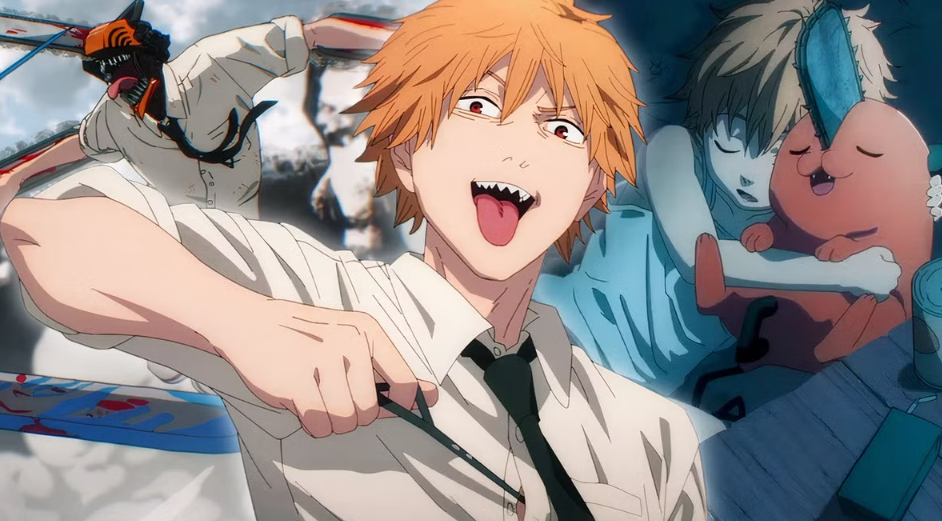
Chainsaw Man finally ended and I didn’t intend to write about it, because even though I like the series, I can’t stand the fandom. I’ve spoken about Chainsaw Man’s pretentious problem before. I don’t want to rehash it, but I will say that most of the slander I’ve witnessed over the past few days is a direct result of Chainsaw Man fans’ disdain towards the wider anime/manga community. It is what it is.
Many things happen and don’t happen in the final chapter. It’s bittersweet, but more on the sweet side, and Denji gets a chance to relive his life as if Pochita and Chainsaw Man never existed. It’s a quiet ending to a series that has very loud moments, and I’m not angry with it. So much disaster happens beforehand that I was left thinking how will Fujimoto wrap this up? Which is markedly different to my sense of dread and anxiety when reading the similarly catastrophic Goodnight Punpun.
The last two or so volumes of Goodnight Punpun contain some of the most depressing chapters of anything I’ve read. The two protagonists are on an endless journey, futilely trying to escape the results of a multitude of terrible decisions awaiting them at home. It is so claustrophobic and helpless, and as the reader, you think “one of you has to die, you both have to die, or the authorities will finally catch you. There’s simply no good end to this”. And then we get a true bittersweet ending – the loss and the trauma remain, but Punpun moves forward with his life, having endured the consequences of that desperate journey. When reading, I never questioned how Asano, the author of Goodnight Punpun was going to wrap it all up, because he seemed to have full control of the story.
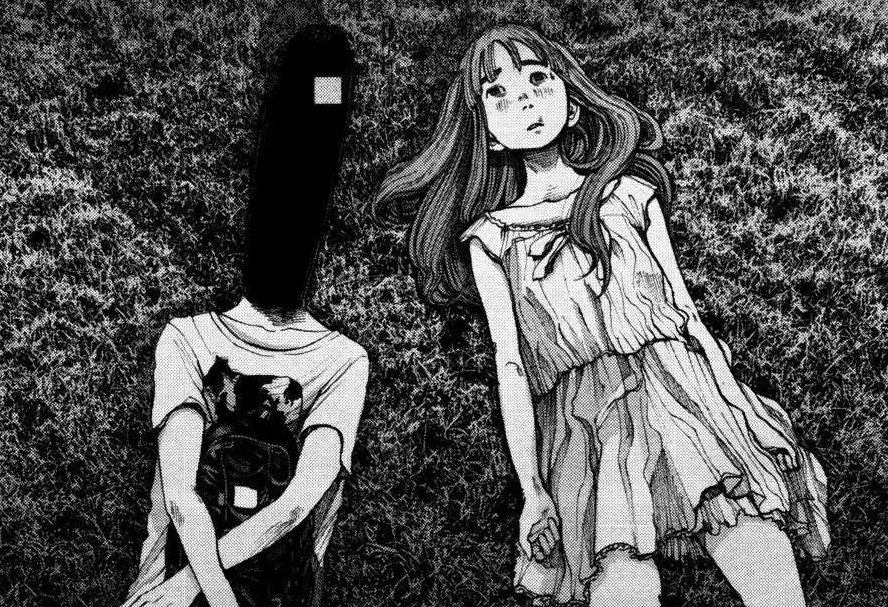
I mean, I recommend it but it’s incredibly depressing. Every trigger/content needed tbh.
Chapter of 232 of Chainsaw Man was to me a fine ending for a story that didn’t seem to be going anywhere tangible, and Denji’s restart was acceptable for a character who was passive to the plot. Things happen to Denji but he rarely has agency – in the latter part of Part 2, anyway. In Part 1, he forms bonds with Power and Aki, he identifies Makima as the villain she is, and when they confront each other, he poses a philosophical question to decide whether or not to kill her – which is massive growth for a character who is usually obsessed with sex, and was mainly interested in Makima as the sexual broker she positioned herself as. I was surprised to hear there would be a continuation of the story and that it would be set in school, but as soon as Asa appeared, all my concerns vanished. Asa is a great character. In the beginning.
What happens to Asa and Denji is quite tragic, and the progress that Denji had made in terms of his hypersexual response to abuse and trauma, is reset to zero. I’m all for a character regression if it leads to something interesting, but with Denji, he remains stagnant until the very end of the series. And because he’s stagnant, the rest of the cast are limited in what they can do with him. Denji revolves around a monotonous cycle: person demands something arduous of Denji – Denji refuses – that person offers him a sexual favour – Denji immediately agrees to the arduous thing – the arduous thing turns out to have catastrophic results for Denji – Denji vows to never be under anyone’s control – another person comes along to offer more sexual coercion or performs an act of assault – Denji begrudging forgives, forgets, and becomes their pawn, having never received the favour he destroyed himself for. And it’s all played off quite comedically. The assault is used as a punchline in the middle or end of a chapter, and Denji’s about turn often takes place after a panel of his blank-faced silence. Sometimes there’ll be an ellipsis to emphasise the obvious. I think this is an unsatisfying and disappointing way to explore sexual abuse against young men in a manga series geared towards boy teens and young adults.
Nice to see this chicken thing again.
If we look back at Goodnight Punpun, we see how the rape Punpun endures affects every aspect of his life, from how he obsesses over Aiko, to his possessive sexual style as a young man, his inability to self-regulate his emotions, and how he responds to injustice. Punpun is let down by every adult around him in various ways, and the changes to his character are slow and subtle. It’s not all spelled out, but enough is implied in the text. Denji’s story, by contrast, ends just as he’s about to engage in probable abuse against Asa’s possessed body before Pochita puts a stop to it all. I’m a bit sad about this, and wish Fujimoto hadn’t touched the topic at all.
I have a couple bugbears about the fandom, though. They have a habit of responding with snark to anything remotely critical of Chainsaw Man, even to the put of reducing the story to basic, soulless elements. When people express disdain for Denji’s hypersexual cycle and the sheer volume of sexual assault performed against him, the superfans will say “oh gee, what a surprise that the story about sexual assault has sexual assault in it!” As if Chainsaw Man is solely a story about sexual assault? It’s much more than that, and its other elements are told in a dynamic and unique way. Now that the end has happened, I’m seeing a lot of “why would you expect the story about a boy who has no agency to end with him having agency”? Since when was Chainsaw Man about that? He has agency in parts 1 and 2, albeit fleeting. To me Chainsaw Man tells the journey of someone who had nothing, is given a power beyond his control, and is still working out how to use it while contending with the darkness within himself. The sarcasm, the “all according to keikaku” responses are not compelling at all.
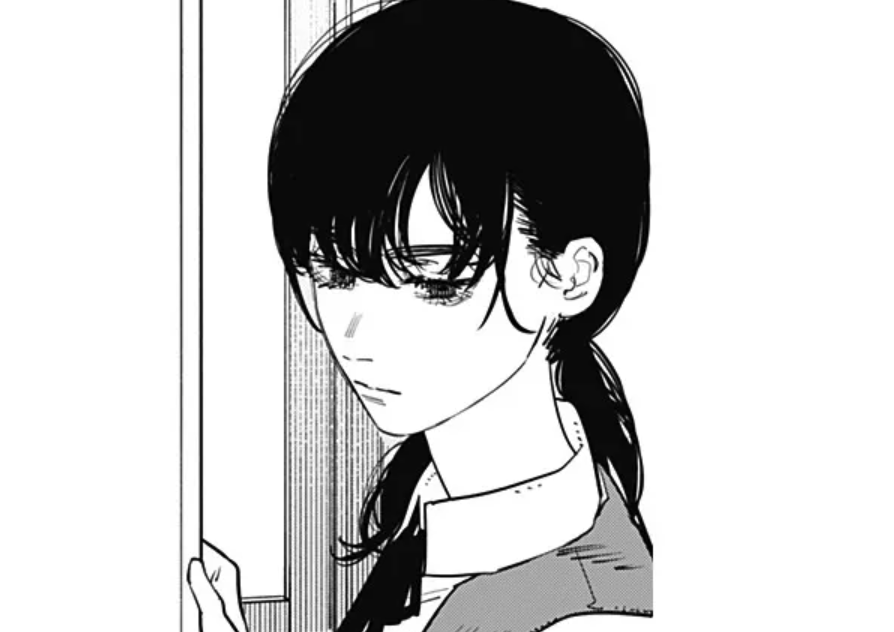
She was perfectly awkward, I just don’t understand how all these men knew she was a perfect depiction of a teenage girl. I can’t agree that her portrayal is feminist because she’s sidelined and her body’s virtually thrown around the plot until she can no longer give consent.
The problem with these fans is that they hate shonen manga. Like adults who read YA novels and complain about the lack of spice, these Chainsaw Man fans think shonen manga and anime is trite, generic, and childish, and fault it for having narratives that appeal to the age group it was originally intended for – and it pains them that Chainsaw Man is categorically a part of that (now, to the former sentiment I empathise with, as I was once like that, but I’m mid-thirties now and still reading shonen stories because I genuinely like them, and I’m seeing far too many of my fellow millennial nerds protesting too much).
Instead of accepting that perhaps their view of shonen is limited, they canonise Chainsaw Man as a series that is “a seinen pretending to be a shonen”, with its author, Tatsuki Fujimoto, becoming an eccentric visionary who could only survive in the manga industry by lowering himself to the bowels of Shonen Jump. That’s why these same people hailed Fujimoto as a feminist who “perfectly encapsulates the awkward teenage girl” in Asa, despite most of them never having been awkward teenage girls all while refusing to read shojo manga which contains many, many stories about awkward teenage girls primarily by women who were once awkward teenage girls, because they find feminine things just as abhorrent as shonen action stories. You ask those people to name five women authors, discounting Robin Hobb and Ursula K LeGuin, and they will stare at you slack-jawed. I’ve had enough.
Overall, I’m still a fan of Fujimoto, I still generally like Chainsaw Man. It’s not a perfect story but I enjoyed most of it. I guess the one thing we can take from this series is that it started conversation – many, in fact. The passion that readers have towards Chainsaw Man is proof that it meant something, and sometimes, as an author, that’s the best you can ask for.