On Berserk and Femininity
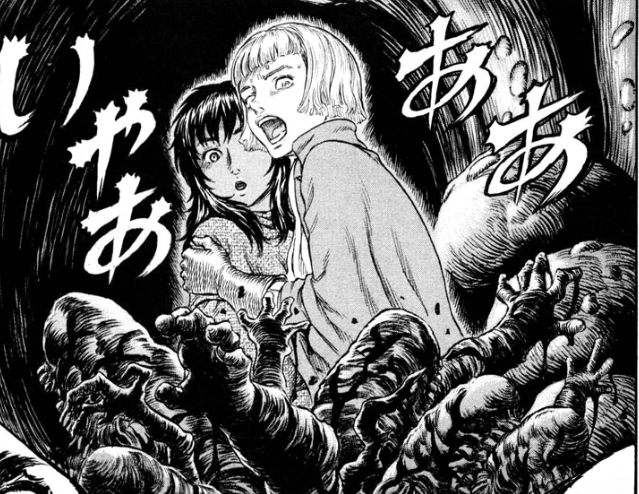
;_;
It’s no secret that I’m an ASOIAF fan. Reading Berserk for the first time a few years ago ended my almost decade-long high fantasy drought, so naturally I sought similar series that would get me into the genre again. George R R Martin’s epic was an obvious first choice: the two series are set in similar European-inspired Medieval contexts, have a focus on war, feature violence and gore, and are heavily character-driven. Although I like Martin’s series, I, like many others, have a problem with how he writes women.
Martin’s women are diverse and morally fluid: yes there are damsels, but there are plenty of villains, and leaders, and weaklings, just like the men. On the other hand, they are regularly framed within their proximity to sex, sexual desire, sexual abuse, rape, and feminine desirability. All very interesting tropes, but very tired. What I also find interesting is how so many ASOIAF women are pansexual nymphomaniacs, casually fingering each other to pass time, but we get no juicy male-on-male action. Martin’s men are all strictly cis, heterosexual and sexist. Gimme a gay scene.

I mean, I don’t talk about Slan AT ALL in this, but I need to show a pic of her because why not? I mean, she does symbolise the sexual themes of Berserk in more ways than one so… wait, is the ship name for Slan and Guts, Sluts???
In many ways, these issues are reflected in Berserk. I have written two times about my discomfort surrounding the gratuitous sexual violence in this series, particularly when it comes to Casca, who is possibly my favourite female character in pretty much any series. Now that things are heating up in the Fantasia arc, I wanted to revisit my thoughts on this subject in regards to womanhood and femininity as a whole. There are quite a few women in Berserk, and the ones we meet are distinct, intriguing, and all have their own significant impact on the story. Putting the sexual violence aside, I prefer Miura’s handling of this subject far better than Martin’s. There is a certain sympathy he gives to his women that makes them more well-rounded for me. Funnily enough, if we take a look at femininity from Casca’s perspective of the story, it’s much easier to see just how complexly it is written.
Young Casca
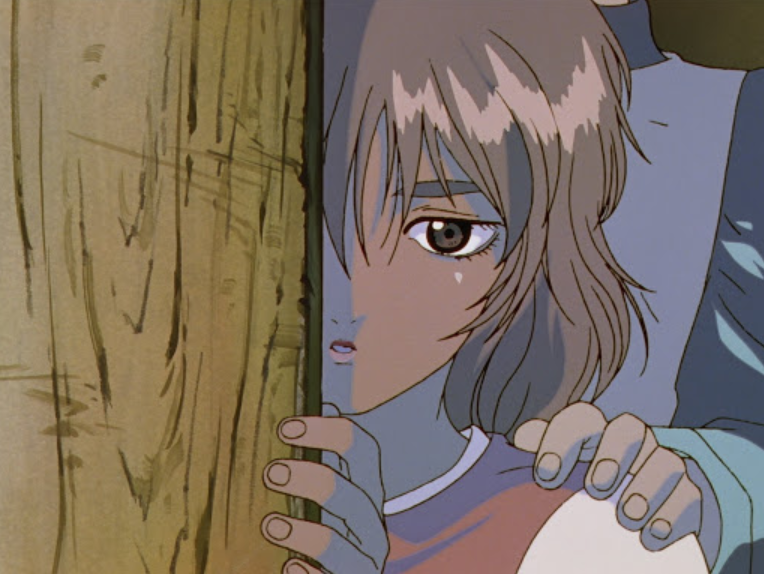
Casca’s early life begins in tragedy when her impoverished parents sell her to an aristocrat, who promptly attempts to rape her. The assault is interrupted by Griffith and a burgeoning incarnation of the Hawk, who then gives Casca a sword to enact revenge. After a slight hesitation, she stabs the aristocrat before he can attack her first, and as the blood oozes down the blade and onto her own trembling hand, her expression is one of disbelief. This would be her first kill, and her introduction to battle. She tags along with the Hawk out of her own free will, and heavily influenced by her gratitude to Griffith, becomes an asset for the band throughout the war. A woman mercenary is rare in the world of Berserk, and so Casca becoming second-in-command is obviously no small feat. As with her first physical conflict, she has to prove herself again and again in an arena reserved for men.
Coborlwitz, The Hundred Man Battle, and Doldrey
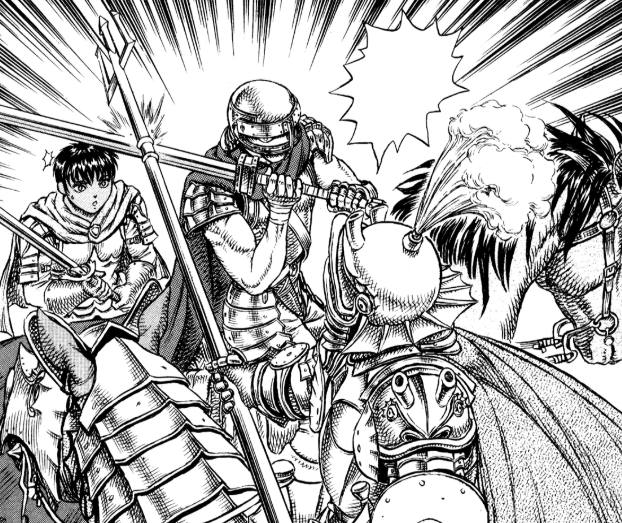
Casca is subjected to discrimination and disrespect during the Hawk’s golden age from such characters as Wyald and Adon Coborlwitz; the former attempts to rape her in front of her band mates, and the latter vehemently expresses his disgust at her presence on the battlefield. It’s during the Coborlwitz saga that we get to properly understand how Casca feels “as a woman”. After already reeling from Adon’s taunts, she succumbs to PMS and has to be saved by Guts, her enemy at the time. Guts is markedly sympathetic towards her, as he tells himself “must be tough, being a woman” after he notices an unconscious Casca’s menstrual blood. Once she awakes and subsequently attacks him out of embarrassment, Guts goes the way of Adon and chides her womanhood, triggering her to cry. Defeated and humiliated, she tells Guts “I wasn’t born a woman because I wanted to be.”

Silly Guts!
I guess this statement can be broken down in a few ways. Since a young age, she has been subjected to sexism and misogyny. Her decision to become a mercenary is made from necessity, but is met with derision because it goes against her assigned gender role. Simultaneously, she is deeply sentimental and sensitive, but unable to express herself because it will then play into a “weak woman” stereotype. Her bandmates know that Casca is deeply “in love” with Griffith, but Casca knows that her feelings will not be reciprocated. The phrase “I didn’t ask to be a woman” is loaded with all of this anguish, but it’s easier to take her jealousy out on Guts than it is to dwell on her complicated feelings towards Charlotte, Griffith, and the gratitude she feels towards him.
Despite the pair’s initial animosity, Guts later proves that he understands her more than she thinks. He teases Casca during the rest of their journey because he knows her pride and stubbornness will drive her to “soldier up”. When they are confronted with Coborlwitz’s men, he still recognises that she is still unwell. When Guts tells her to depart by stingily mentioning her “master”, Griffith, Casca is obviously conflicted again, most likely self-conscious at the implied double-entendre, and disappointed that she still needed to be saved. When she finally returns to retrieve Guts with the rest of the Band, Judeau (always the observer) notes how feminine she appears as she frets and fusses over Guts. Eventually, Casca gets to prove to everyone that she belongs on the battlefield during the final Doldrey campaign, where she lands a fatal blow to Coborlwitz and leads her faction to victory.
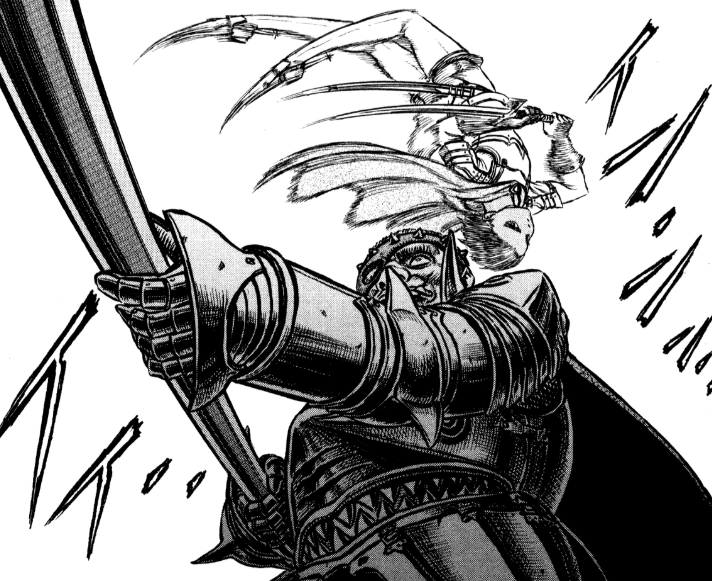
My Girl!!
Big Sis
As new Commander of the Hawk following Griffith’s imprisonment, whatever femininity Casca wants to hold onto is well and truly shelved. She barely has time to sleep. The other men respect her as their leader, Big Sis, but although Judeau notices her worsening fatigue, it appears that the rest of the Hawk are too confused and too injured to really focus on Casca’s wellbeing.
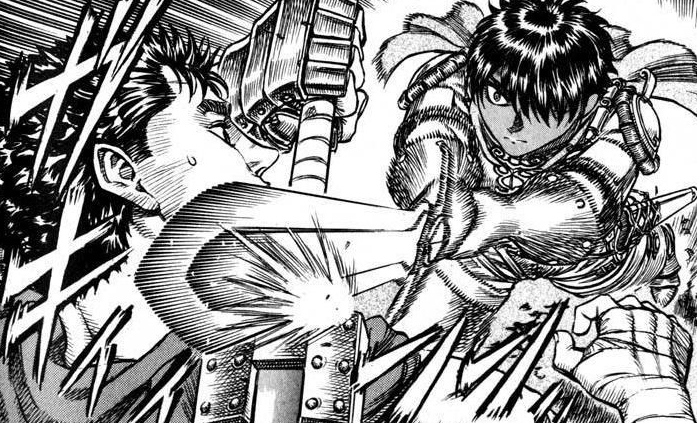
She done told you to DRAW your SWORD and defend yourself.
When Guts reenters the narrative, Casca unleashes the same fire, frustration, and anger as seen during the Coborlwitz saga. Their mutual honesty is one of the reasons why I love their relationship so much. Casca has assumed the role of strong, resilient leader for a year, and Guts has donned a tough exterior his whole life to cover up for a deeper legacy of trauma, but away from everyone else, they become mentally and physically naked. I think it’s a sweet artistic touch that the moment Casca finally acknowledges her unhealthy desire for Griffith, her glaring desire for Guts, her fatigue, her fear, and all her insecurities about herself, is the moment she has sex for the first time. Likewise, Guts unravels himself before her, and through their joint trauma, they bond with each other.
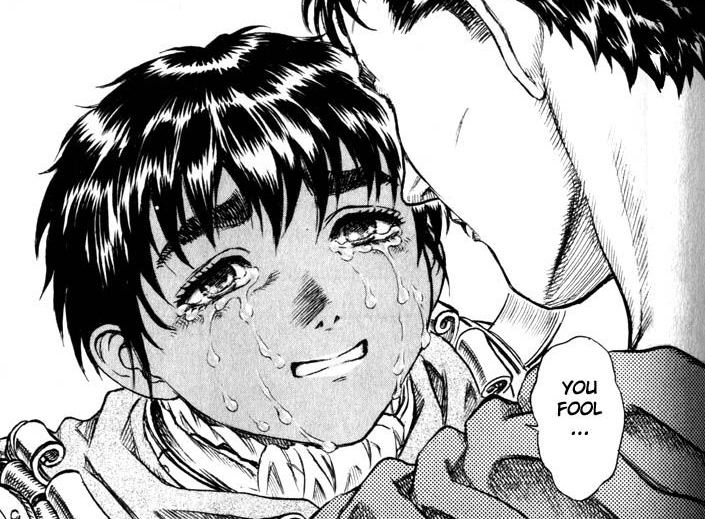
*swoon*
The sex scene is important. Casca is self-conscious when Guts comments on her scars, reminding him “I’m still a woman”. Guts asserts his stance because for him, her scarred body distinguishes Casca’s brand of femininity from other women, even if no one else had appreciated it before. Guts already praised Casca in a dress, despite her misgivings, and at that time, he had no doubt that she looked better than everyone else there. In this scene, he reaffirms her beauty in a way that makes sense to them as mercenaries, but also speaks to her desire to be seen as a woman. Guts then playfully recites a list of stereotypes to let her know that she’s “plenty womanly”, which further breaks the ice of her understandable nerves.
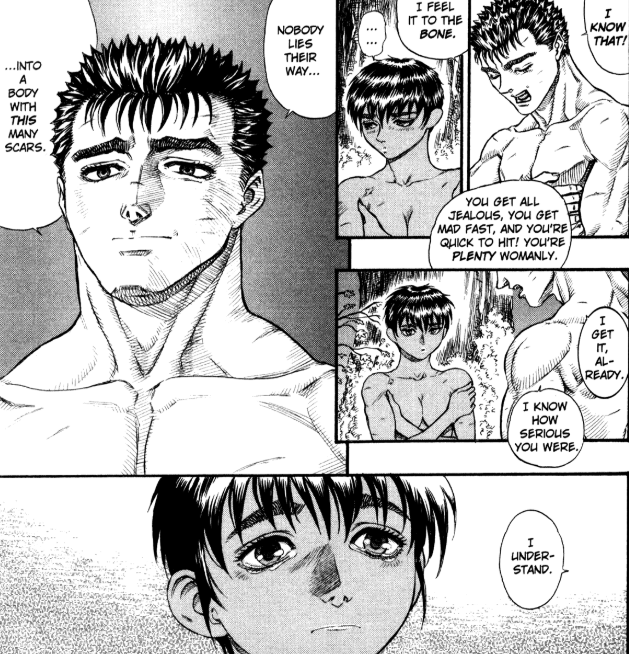
uggggggh I love them
As an aside, I especially like the contrast between this sex scene and Griffith and Charlotte’s. We get to read Casca’s internal monologue as she processes her feelings towards Guts. The first half of the sequence is all from her point of view, and the reader gets to see just how far she has grown emotionally. When she expresses discomfort, Guts listens and slows down for her, and later, when Guts suffers his PTSD flashback, he allows Casca to console him.
On the other hand, Griffith is solely focused on himself. He is almost lifeless and robotic as he basically coerces Charlotte into bed, and even whilst she is visibly in pain, unlike Guts, Griffith plows onwards—because this moment has nothing to do with his superficial attraction for Charlotte; it’s all about dominance, panic, anger at what he sees as Guts’s betrayal, and a desperation to reclaim some sense of himself. When he does notice Charlotte’s trepidation, he simply tells her to cast her fears into the fire—very different from Guts encouraging Casca to “feel alive” before they had sex. Throughout the late-night palace endeavour, we never get to read how Charlotte feels about all this. The whole moment is intentionally uncomfortable.
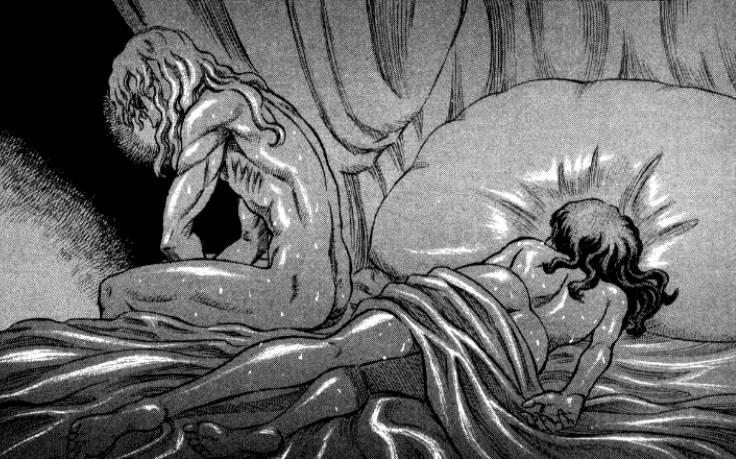
Not cute at all.
The Tower
As Casca’s elite party journeys back to Wyndham to rescue Griffith, she is forced to face her insecurities when confronted with Charlotte. The Princess is dainty, weak, spoilt, and a bit of a brat, and she is also the cause of Casca’s earlier pain, a physical reminder of everything she could never be—not just for Griffith, but for society as a whole. As a princess, Charlotte is precious, and her survival is equivalent to the preservation of an entire kingdom. Although Casca might feel “a way” about her, she has a duty to ensure her safety and survival, even at the detriment of herself.
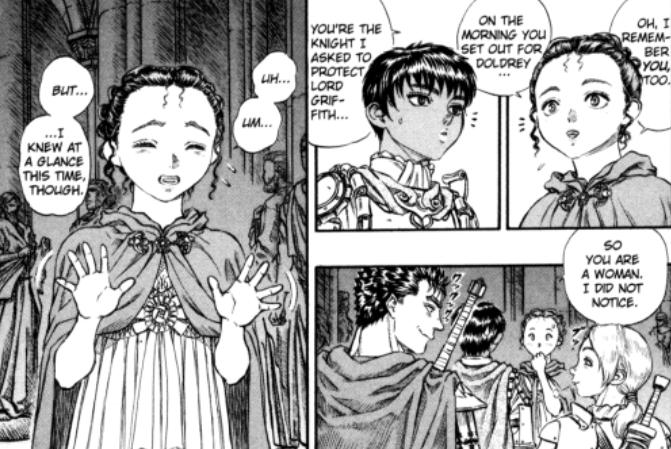
sigh… lol
These feelings come to a head when Casca lets slip how she feels to Guts, who is understandably offended, and shortly after, he has to literally carry Charlotte on his back, adding to both their discomfort. These two women highlight the various social breaches that pervade Miura’s world: the upper class/aristocracy versus the working class, the weak versus the strong, and white versus ethnic minority. Charlotte is everything a woman is supposed to be in this setting, whereas Casca contradicts these expectations.
Interestingly, the rough and rugged Guts is physically suited for Casca, whereas the almost celestial Griffith is Charlotte’s perfect match. Throughout the story, characters mention how he looks like an aristocrat compared to everyone else, and a significant aspect of Griffith’s appearance is his delicate femininity. I do think it’s interesting that Miura used stereotypically feminine attributes to distinguish Griffith from other soldiers.

A rookie mistake.
The Eclipse
Not to belabour a point I have made a few times, I’ll just say that the rape of Casca is an obvious example of misogyny, and a typical attack for Miura’s men when it comes to their interactions with women. It is hurtful and traumatic in many ways, Griffith being Casca’s once saviour from a previous rape, the man she idolised, loved, and worshipped, and risked her life to rescue. Griffith treats Casca like a pawn in the same way he did with Charlotte, only this time, Guts was right in front of him. He forces Guts to watch the rape because Guts is a source of unwitting fixation; hurting the man who “made him forget his dream” was all Griffith cared about.
The Conviction Girls
The Conviction Arc provides us with various women who impact the story. The Lost Children Chapter is told from both Guts and Jill’s perspectives, and the scenes in Godo’s cabin explores Erica’s role as primary caregiver of Casca and close companion of Rickert. By this point, Casca is mute and suffering from severe trauma as a result of the Eclipse, but she manages to make friends with Luca and her band of prostitutes. They rechristen her Elaine, and protect her from Mozgus’s inquisition, quickly becoming heroes in their own right as they fight for survival during the fall of the Tower of Conviction.
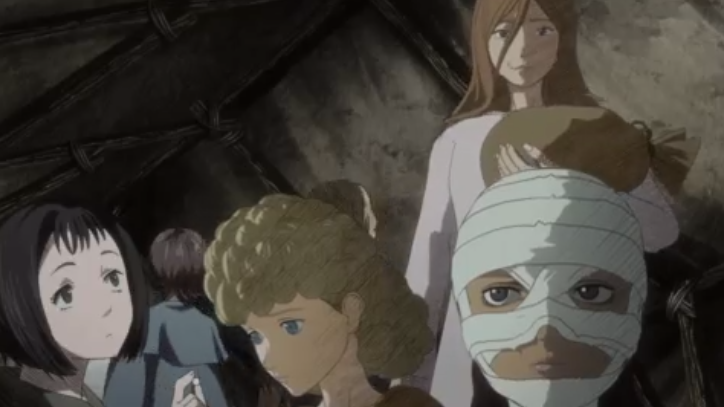
TW: Berserk ‘17
Luca and her team are expected in a setting like Berserk’s: known as the world’s oldest profession, prostitution and sex work are ways in which marginalised women all over the world have made money to survive. The Conviction Girls use their status to their own advantage; acquiring money and precious items, information and protection from hapless nobleman Jerome, and general street smarts that help them navigate the disaster of the tower’s destruction. Their difficult lives lead them to make important decisions that keep them alive, and Luca’s fearlessness is not seen in any other character: her casual partnership with Skull Knight is just one example of this.
Of course, the Conviction Girls aren’t all brave. The much derided Nina is cowardly to the point of selfishness, and she departs from the rest of the crew after being saved by them countless times, to supposedly live out her final days bleeding and rotting out from syphilis with her equally infected and equally spineless boyfriend. But Nina is just another example of the diversity of response to difficult circumstances. It would be unrealistic if everyone was as brave as Luca; there are plenty of Ninas in the real world. And when you’re a woman in Berserk, perhaps this is expected.
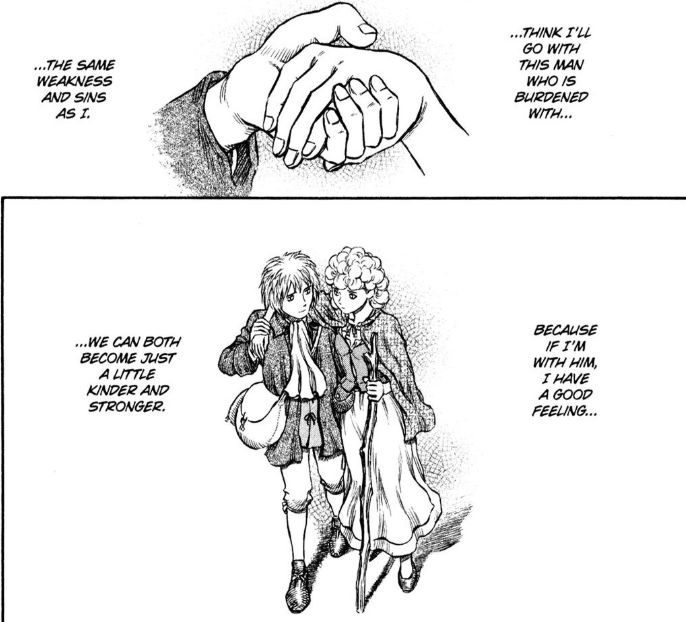
I mean, I guess.
My major complaint of this arc is the absence of Casca’s voice. Whilst I understand the severity of her condition, disability does not render one totally voiceless, and I do think it’s a shame that we never get to see how she felt during Guts’s absence, we never see how she escaped Godo’s cabin, and we never see a response to her almost-execution. Miura has shown us that he knows how to articulate Casca’s mute voice in the wonderful corridor of dreams , during which we are literally shown the landscape of her mind. It would have been great to see some of this during the really torturous moments of Conviction. After all, much of the supernatural phenomena surrounding the Tower was reminiscent of the Eclipse. Sadly, we never get a proper callback to this from Casca’s eyes.
That being said, Casca’s disability introduces another aspect of womanhood and femininity that is often ignored during mainstream discourse, and media across the board has a major problem with representation in this area. I will have to leave this to an actual disabled woman to decide whether Miura’s writing of Casca during Conviction was good representation, but I do think it’s notable that she contributed to the lives of the Conviction Girls, a group that is dependent on its physical and mental capabilities to survive.
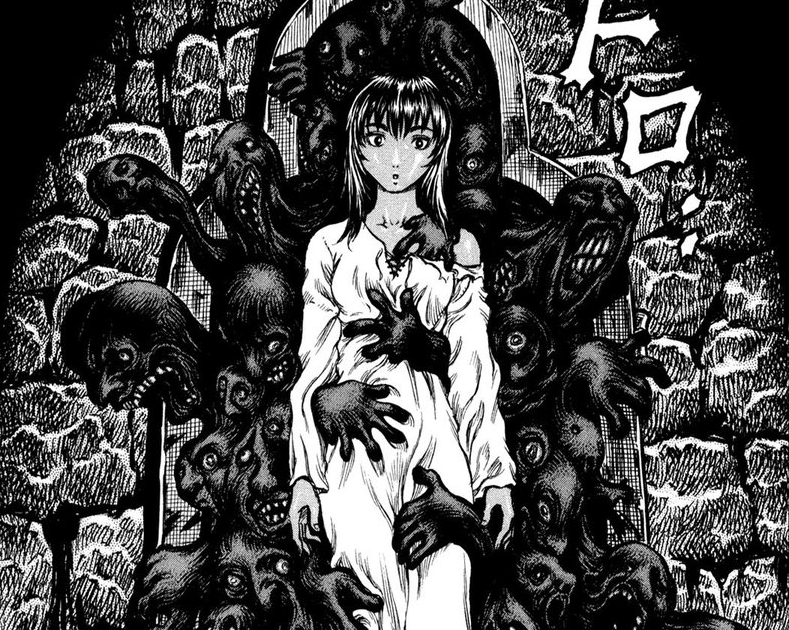
Miura really puts Casca through the ringer in Conviction, but her expression rarely changes from this.
With Farnese
Lastly, the introduction of Farnese brings Casca’s story full circle. Farnese is the anti-Charlotte. Hailing from an extremely powerful aristocratic family, Farnese is in many ways spoilt and corrupted. We first meet her as a villain, who turns away from her faith to follow Guts and find herself. Like Griffith and Casca, Guts saves Farnese from danger, and like Griffith, Guts tells Farnese to “do what [she] wants” in terms of tagging along with him, but she does, and becomes a better person for it. I won’t go into loads of detail because I want to write about Farnese more extensively one day, but it’s clear that forfeiting her ties to privilege helps her become more caring, reliable, selfless, and empathetic.
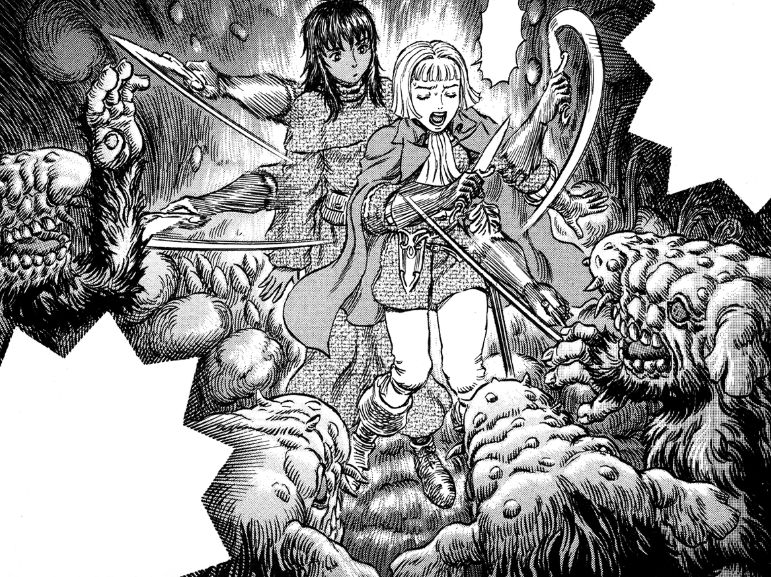
Only when she returns home do we see how imprisoned she is, and the palace that so many others covet is to her just a gilded cage. Her journey outside with “real people” most likely highlighted just how stifling the aristocracy is, especially in terms of female agency and autonomy: her father has the final say in all aspects of her life; her brother forces her into a betrothal as compensation for a boat, and her mother is mercilessly scathing towards her father, revealing an understandable resentment that she feels towards the Vandimion restrictions.
When she is freed from her family, Farnese switches roles with Charlotte. She is tasked to look after the now delicate and fragile Casca, and like Casca of the Golden Age, Farnese contends with conflicted feelings of admiration, awe, and romantic attraction towards Guts. When Chad-Roderick asks Guts “bro what’s up with you and the girl?”, Farnese stops herself from hearing his answer, and once again in the corridor of dreams, Casca’s fond memories of Guts confirms for Farnese that her own place in Guts’s life is not the same as Casca’s.
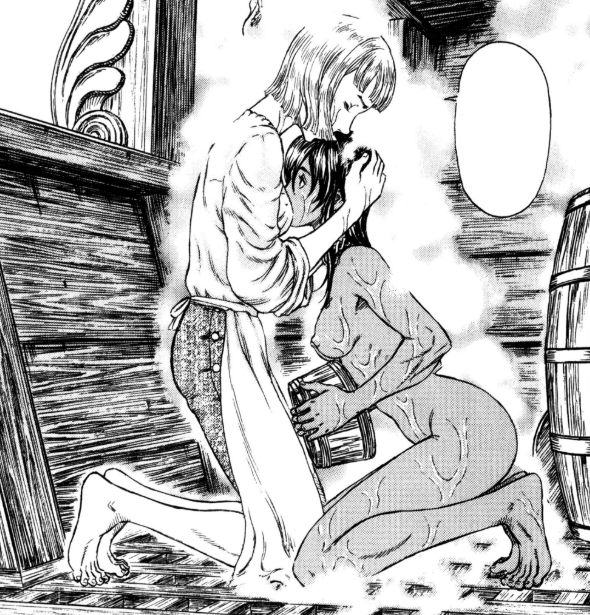
Farnese’s journey of overcoming her unrequited feelings is centred on her self-development: she undertakes witch training and pours her heart into helping Casca recover from her past trauma. At this current point in the story, it is implied that Farnese will play a role in reuniting the pair by helping Casca come to terms with the thorns around her heart.
There is so much to say about Farnese but I’ll leave it for another essay. I could have easily written about femininity from Farnese’s perspective, because there are layers upon layers…
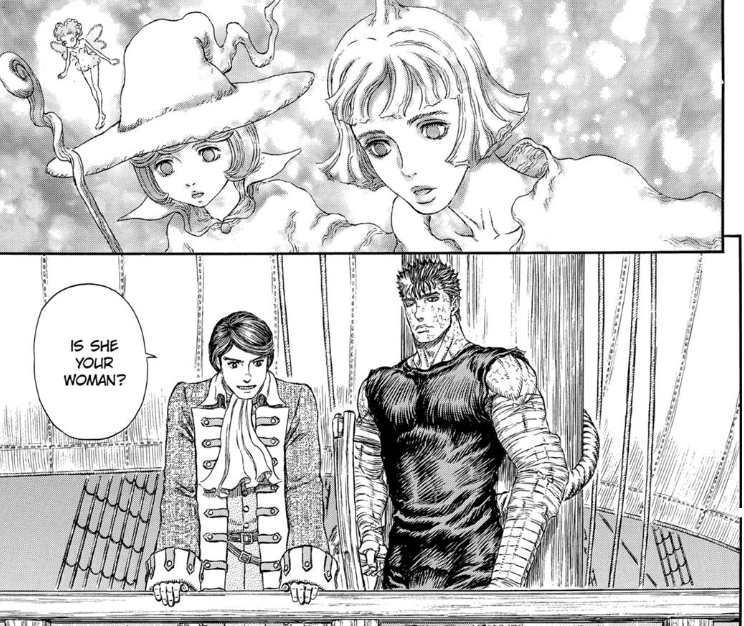
On a positive note, at least Roderick is a nice person.
Final Thoughts And That..
However, I wrote this from Casca’s perspective because she is still the main woman of the story, the one who was there from the beginning, before Guts was the cool, contemplative leader he is now. I wrote this from Casca’s perspective because, as stated above, her voice disappears for a large chunk of the story, but her presence is still important to the characters all around her. Now that she has awakened, she has already become Isidro’s training partner and shown the rest of the Party that she can still fight like the old days. I don’t know a single Berserk fan who isn’t excited for this new era for Casca, and how her awakening will impact the conflict between Guts, Griffith, and the rest of the world. Considering her years of silence, I think it speaks volumes that her awakening was a moment of pure joy for the fanbase.
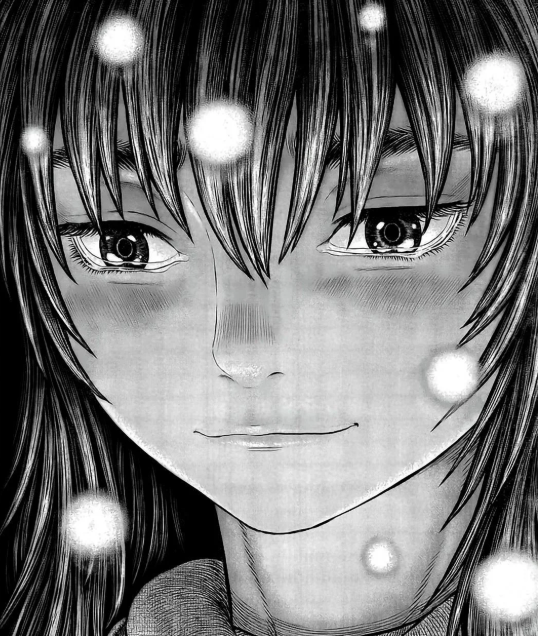
Just a beautiful page.
There are so many other women to talk about: Schierke, Flora, Theresia, Shisu, Sonia, Danann, Morda… all distinct from each other, all powerful in their own rights, and all burdened with the task of being women in a world that treats them unfairly. The diversity of the women is strengthened by the tropes they avoid: little Schierke becoming the teacher and lifeline for Guts, or the elderly Flora being seen as an urgent threat to Griffith’s plans, and yet we never see her extravagantly showing off her abilities. Instead, Flora’s unseen magic (and her reputation) adds to the weight of her power, which I think is a skilful way to illustrate the fear of the unknown in an unassuming and kindly older woman.
For a story that is still only 361 chapters long, it’s refreshing that there is still so much to write about it. I will be objective in saying that there are many stories out there that depicts women in a less problematic way as a whole (you honestly can’t separate the sexual violence from Berserk) and those stories tend to be written by women anyway. However, out of all the seinen series I’ve read so far, Berserk’s women are up there with my favourites—not only because of how varied they are, but additionally because they are all so human, and their impact on the story is so carefully considered.
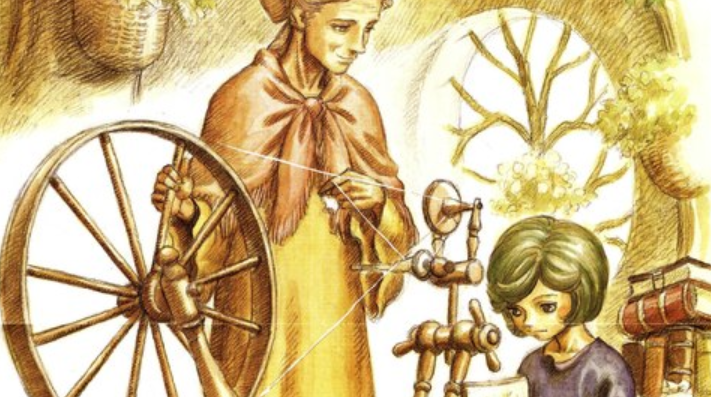
I feel like I’ve scared a lot of potential readers away from Berserk because I am very careful to mention the sexual violence in the earlier parts of the story. I want to be responsible and I’m aware that this feature could trigger some unpleasant memories for a lot of people, however, I do admire how Miura has written the other aspects of womanhood and femininity, and it’s been obvious since the latter half of Millennium Falcon that his storytelling in this respect has changed quite drastically. That only makes me more hopeful for what we will see of Casca and the others going forward, especially now that Casca is back. Someday soon, we will get to hear, from her, how the Eclipse, Griffith’s attack, and his betrayal, made her feel, and these revelations will undoubtedly interact with her identity as a woman. I’m so excited to accompany her on that journey.